
Machine learning is one of today’s most exciting and rapidly growing technology areas. But what exactly is it? Machine learning teaches computers to learn from experience and improve over time without being explicitly programmed. Instead of giving the laptop a strict set of instructions, we feed it data, which learns patterns from it to make decisions or predictions. Artificial intelligence chat systems and AI chatbot technologies are prime examples of how ML is being applied to create more responsive and intelligent systems.
In this article, we’ll dive into the basics of machine learning, explore how it works, where it’s used, and some key concepts and challenges. By the end, you’ll have a solid understanding of what ML is all about.
Define Machine Learning
At its core, machine learning (ML) is a method of making computers “learn” from data and get better at specific tasks. Imagine teaching a child how to identify different animals. You might show them pictures of a dog, a cat, and a bird; over time, they’ll be able to locate these animals when they see them again. In ML, we have a computer system instead of a child. And instead of showing pictures, we give it lots of data to learn patterns and improve its ability to make predictions or decisions.
Machine learning is used in many areas, such as recommending products on online shopping sites, detecting spam emails, and even predicting stock market trends. The more data the system gets, the better it can make decisions. Systems like AI chatbot online or chatbot AI are used to enhance these decisions in real-time, helping to improve customer interaction experiences across multiple sectors.
How Machine Learning Works
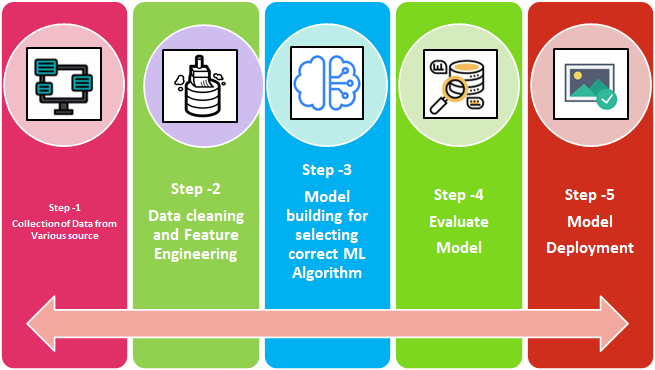
Step 1: Collect Data from Different Sources
The first step is to gather data from various places. This can be data from text, images, numbers, or sensors. The type of data you collect depends on the problem you’re trying to solve. For example, if you’re creating a chatbot AI or artificial intelligence chat system, you may use past customer1 conversations to train the system.
Step 2: Clean Data and Prepare Features
After collecting the data, it’s time to clean it. Cleaning involves fixing mistakes, filling in missing information, and removing anything that’s not useful. After cleaning, you prepare the data by selecting the most important features that help the machine learn better. For example, in an online chat with AI system, you might use features like word choice or the mood of the conversation to improve how the chatbot responds.
Step 3: Build the Model and Choose the Right Algorithm
Next, you build the machine learning model. This means choosing the right method or algorithm to solve your problem. For example, if you’re making a chat with AI system, you might pick an algorithm that helps the machine understand and respond to text, like a natural language processing model. Then, you train the model using the cleaned data to teach it how to make predictions.
Step 4: Test the Model
Once the model is built, you need to test it. This means checking how well it works with new data that it hasn’t seen before. You use certain measures to check if the model is making good predictions. For example, when working with an AI chatbot online or AI chatting online, you test it to make sure it can answer questions correctly and understand different types of conversation.
Step 5: Deploy the Model
Once the model works well, it’s time to put it into action. This step is called deployment, and it means getting the model ready to use in real life. For example, if you’re using an online talking AI system, you set it up so it can have real-time conversations with people and give answers based on what it has learned.
The key part of this process is that the machine keeps improving its predictions as it gets more data and experience, just like how a person might get better at identifying animals over time. Chat with AI tools that leverage machine learning improve their ability to interact with users based on continuous data input and experiences.
Where is Machine Learning Used?
Machine learning is everywhere! Here are a few examples of where we see it in our daily lives:
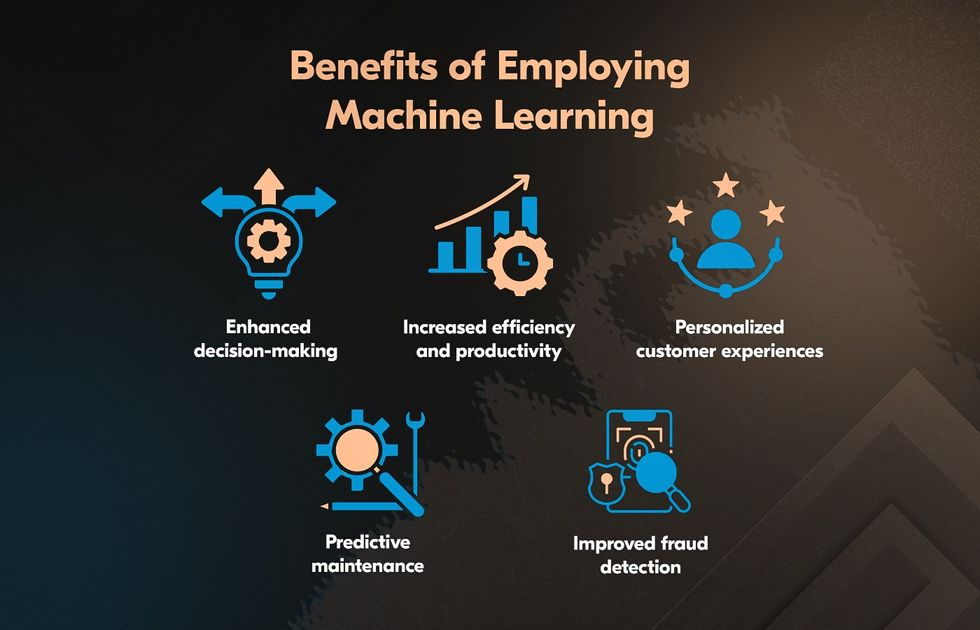
Better Decision-Making
Machine learning helps make smarter decisions by looking at large amounts of data and spotting patterns. This allows businesses to make choices based on facts, not just guesses. For example, in finance, it can predict stock market changes, helping investors make better decisions.
Higher Efficiency and Productivity
By automating repetitive tasks, machine learning makes work faster and easier. It handles data processing, customer service, and other routine tasks, so employees can focus on more important work. In manufacturing, it can improve production processes, reducing waste and making things run more smoothly.
Personalized Customer Experiences
Machine learning helps companies give customers a more personal experience by understanding their likes and preferences. For example, online shopping sites use ML to recommend products based on what you’ve bought or searched for before, making it easier to find what you want.
Predicting Maintenance Needs
Machine learning can predict when equipment or machines need repair before they break down. By looking at data from sensors, it can tell when something is likely to fail, so businesses can fix it before it causes problems. This helps companies save money and avoid downtime.
Better Fraud Detection
Machine learning helps find fraud by looking at transaction patterns and spotting anything unusual. It can quickly detect fraud that might go unnoticed by people or older systems. For example, banks use ML to spot strange credit card activity and stop fraud before it happens.
Additional Use:
- Healthcare: Machine learning can help doctors by analyzing medical data, such as X-rays or test results. For example, it can help detect early signs of diseases like cancer or predict the likelihood of a patient developing certain conditions.
- Finance: Banks and financial institutions use machine learning to detect fraud and decide on loans or investments. It can also predict stock market trends, helping investors make better decisions.
- Self-Driving Cars: Autonomous vehicles use machine learning to understand their surroundings. By analyzing data from cameras, sensors, and GPS, these cars can make real-time decisions about steering, braking, and accelerating to navigate the roads safely.
- E-commerce: If you’ve ever noticed how Amazon or Netflix suggests products or movies based on your previous purchases or viewing habits, that’s machine learning in action! The system analyzes your preferences and recommends new items similar to what you’ve liked before.
Key Concepts in Machine Learning

Machine learning has some essential terms and concepts you should know to understand better how it works:
- Training Data and Testing Data: The data we use to train a machine learning model is called “training data.” This data teaches the machine how to make predictions. After the model is trained, we use a separate set called “testing data” to check how well the model performs. It’s like studying for a test and then taking it to see if you’ve learned what you need.
- Overfitting and Underfitting: These are common problems in machine learning. Overfitting happens when a model learns the training data too well, including all its noise or small details, which means it only works well on new, unseen data. Underfitting is the opposite—when the model doesn’t learn enough from the data, making it inaccurate even on the training data.
- Bias: Just like humans can have biases, so can machine learning models. If the data used to train a model is biased, the model can make unfair decisions. For example, if we train a hiring model on resumes from only one group of people, it might favor that group and ignore others. It’s essential to ensure fairness in machine learning models.
Common Machine Learning Algorithms
Machine learning uses many algorithms or “recipes” to learn from data. Some of the most common ones are:
- Decision Trees: This is like a flowchart where each question leads to a decision or prediction. For example, “Is the fruit red?” If yes, it could be an apple; if no, it could be a banana.
- Neural Networks: Inspired by the human brain, neural networks comprise layers of interconnected “neurons.” These networks can solve complex problems like image recognition or speech understanding.
- K-Nearest Neighbors (KNN): This algorithm compares a new data point to the closest data points in the training data and assigns it to the most common group. For example, if most of the nearest neighbors are apples, it will classify the new fruit as an apple.
Machine learning technologies are evolving to become part of everyday tools like chat with AI, online chat with AI, and chatbot AI, which continue to improve with every conversation.
Machine Learning vs. Traditional Programming
In traditional programming, humans write instructions for the computer to follow. In machine learning, instead of writing exact instructions, we teach the computer by giving it lots of examples of data. This allows the computer to learn and make decisions on its own. While traditional programming is still essential, machine learning offers a more flexible approach that can adapt and improve over time.
End note

Machine learning is a powerful tool that is changing how we interact with technology. From helping doctors make better decisions to enabling self-driving cars, it’s already shaping our world excitingly. Understanding the basics of machine learning allows you to see just how impactful this technology can be. Whether you’re using it every day without realizing it or are interested in diving deeper into the field, machine learning is a fascinating area that will only grow. So next time you use an app or service that seems to “know” you, you can thank machine learning for making it all possible! And as AI chatbot online systems and online talking AI continue to evolve, the future promises even more intuitive, personalized experience
Want a Smarter Way to Create Your Coaching Chatbot?
At AI Chatbots Coach, we work with coaches, trainers, and business owners to turn conversational AI into a powerful tool for growth. Whether you’re just starting or refining an existing bot, we’re here to help you build something smart, useful, and totally aligned with your coaching goals.
If you need help with Chatbot Development, feel free to contact us at headhoncho@aichatbots.coach.
FAQs
1. What is machine learning, and how is it different from traditional programming?
ML is a type of technology that allows computers to learn from data and improve over time without being explicitly programmed. Unlike traditional programming, where specific rules and instructions are written by humans, machine learning systems identify patterns in data and make their own decisions or predictions.
2. Where is machine learning used in real life?
It is widely used in various areas such as online shopping recommendations, spam email detection, fraud prevention, healthcare diagnosis, financial predictions, self-driving cars, and AI-powered chatbots that improve customer interactions.
3. How does a machine learning system work step by step?
A typical ML process includes five steps:
- Collecting data,
- Cleaning and preparing the data,
- Building and training a model using the right algorithm,
- Testing the model with new data, and
- Deploying the model for real-world use.
The system continues to learn and improve as it receives more data.